

The Complete Guide to Monitoring AI Visibility for Ecommerce Brands
Introduction
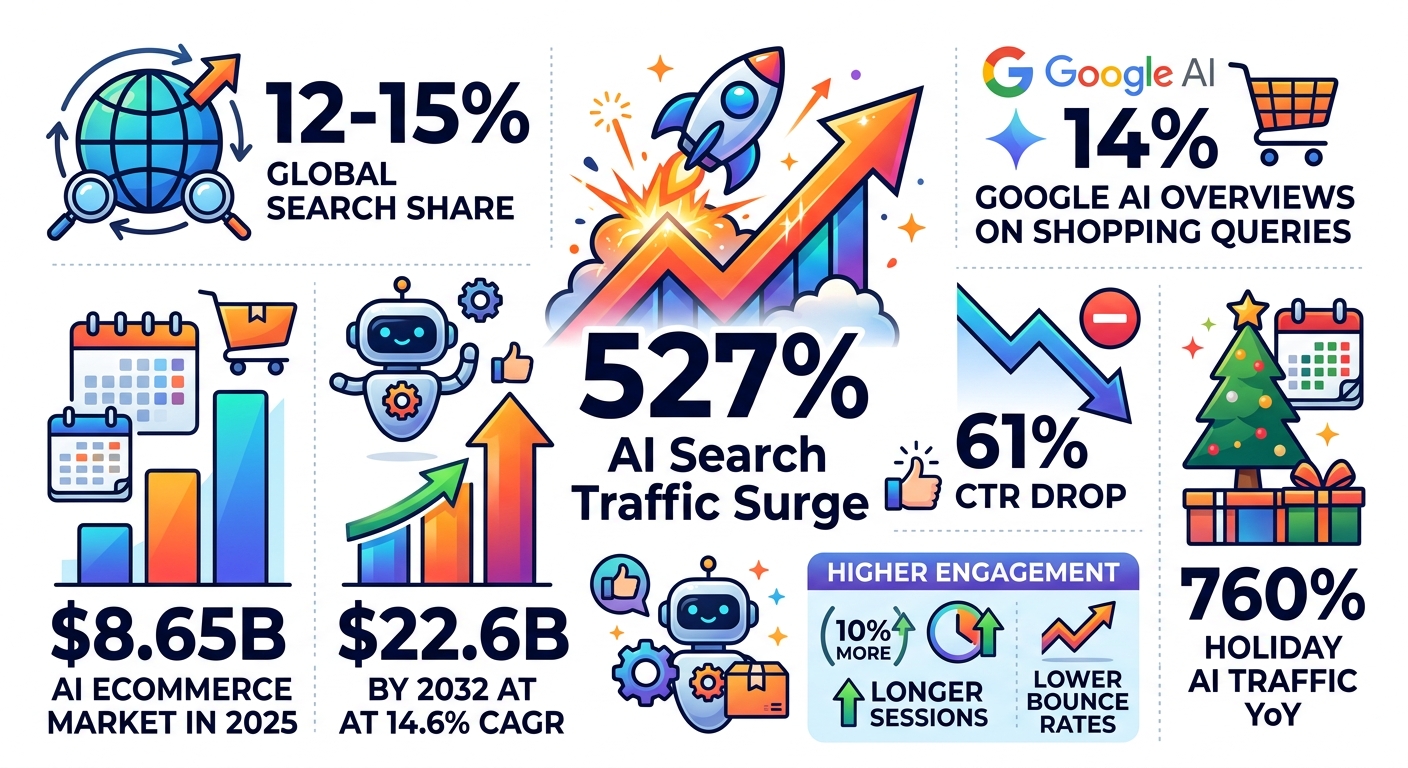
Imagine this: AI search traffic has surged 527% year-over-year, capturing 12-15% of the global search share, yet most ecommerce brands remain invisible in AI responses to high-intent shopper queries.[1][2] With Google AI Overviews appearing on 14% of shopping queries and organic CTR dropping up to 61%, ecommerce sellers face a critical shift: traditional SEO metrics like rankings and clicks are no longer enough.[3][4] AI visibility monitoring for ecommerce is the process of tracking your brand's mentions, citations, and recommendations in AI-generated answers across platforms like ChatGPT, Google AI Overviews, Perplexity, and Claude—especially for purchase-intent prompts like "best running shoes under $100."
Why does this matter now? The AI-enabled ecommerce market hit $8.65 billion in 2025, with shoppers from AI sources showing 10% higher engagement, longer sessions, and lower bounce rates than traditional search traffic.[5][6] During the 2025 holidays, AI traffic to retailer sites skyrocketed 760% YoY from Nov. 1 to Dec. 1, driving billions in sales—but only for brands that appeared in those responses.[7]
Traditional tools like Google Search Console (GSC) reveal impressions and clicks, but they miss "prompt gaps"—shopper queries where competitors dominate AI answers, leading to zero-click losses. Enter unified platforms like BrandKarma, which track visibility scores, share of voice, and sentiment across key AIs while complementing GSC data for actionable insights.
This complete guide to AI visibility monitoring for ecommerce covers definitions, trends, step-by-step monitoring processes, metrics, tools, strategies, and case studies. You'll learn how to identify gaps, measure success, and boost citations to capture AI-driven traffic.
Ready to monitor your AI visibility? Start a free trial with BrandKarma today and get your first visibility report in minutes.[8]
What Is AI Visibility and Why Does It Matter for eCommerce?
Defining AI Visibility in Search
AI visibility refers to how often your ecommerce brand, products, or site appears in AI-generated responses to user prompts—whether as a direct recommendation, citation, or mention. Unlike traditional SERPs, AIs like ChatGPT (68% of AI chatbot traffic), Google AI Overviews (2B users), Perplexity, and Claude synthesize answers from web sources, prioritizing authoritative, structured content.[2]
Key Takeaway: AI Visibility Score
A composite metric (often 0-100) combining citation frequency, position in responses, sentiment (positive/negative mentions), and share of voice vs. competitors. Average ecommerce scores hover around 12/100—room for massive gains.
For ecommerce, this means tracking prompts like "top espresso machines for beginners" to see if your SKU ranks in AI shopping lists.
The eCommerce Impact
Google AI Overviews now trigger on 14% of shopping queries (up 5.6x since late 2024), intercepting traffic before clicks.[3][9] Zero-click risks are high: 60-65% of AI responses keep users on-platform, with organic CTR plunging 61% on affected queries.[4] Yet, AI-referred visitors convert better—9x higher than social during holidays.[10]
Ecommerce brands risk lost revenue if competitors dominate citations. Benefits include higher-value traffic: AI shoppers engage 10% more and buy sooner.[6]
- Risks: Competitor lock-in on prompts (e.g., affiliates/review sites cited 65%+ in CPG); declining CTR from AI intercepts.
- Benefits: 97% of retailers adopting AI; $144B in platform-driven sales by 2029.[6]
Stats Spotlight
The AI ecommerce market: $8.65B in 2025, growing to $22.6B by 2032 at 14.6% CAGR. 84% of ecommerce pros use AI daily, with 71% experimenting on product content.[5][6]
The Rise of AI Search: Current Landscape and Trends
Key Platforms Breakdown
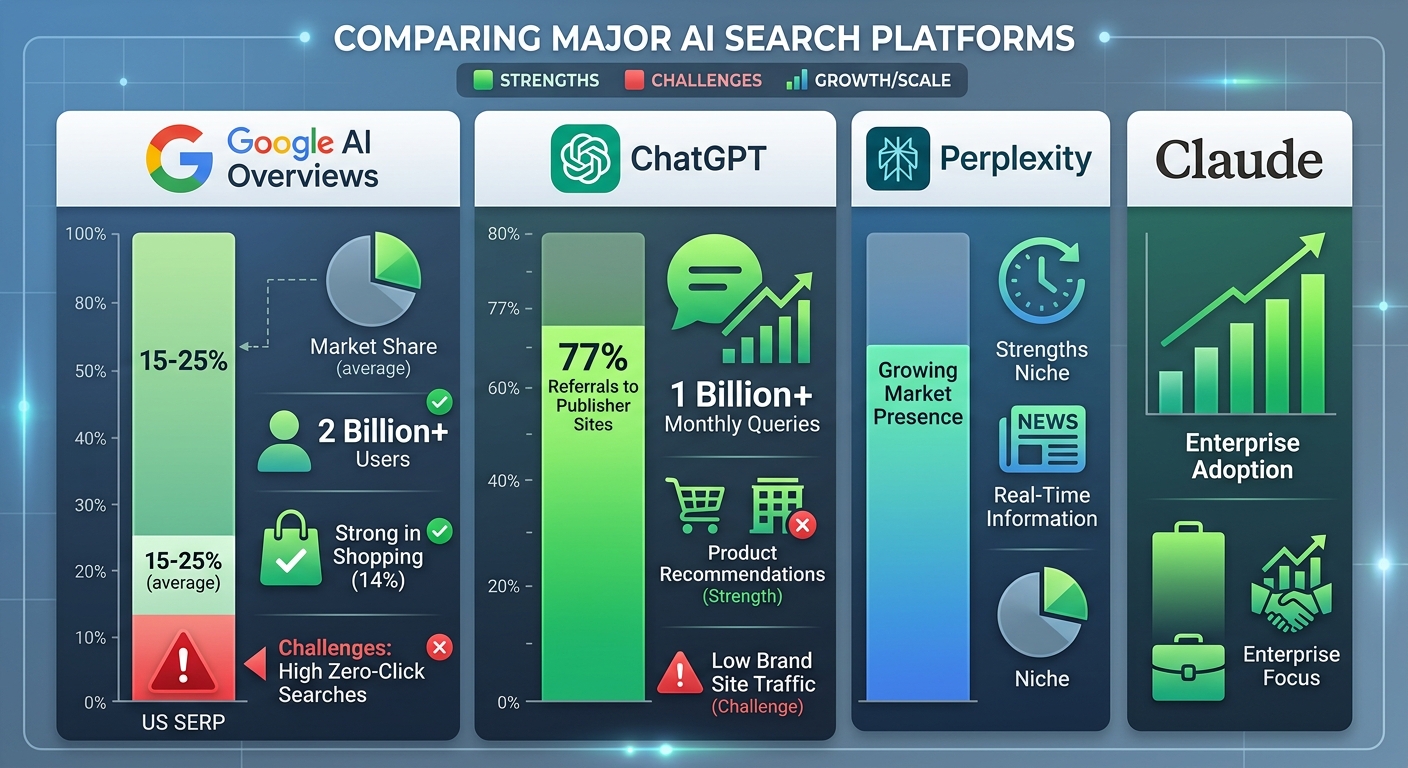
| Platform | Market Share/Reach | Ecommerce Strengths | Visibility Challenges |
|---|---|---|---|
| Google AI Overviews | 15-25% of US SERPs; 2B users | Shopping queries (14%); structured data citations | Zero-click (60%+); CTR -61% |
| ChatGPT | 77% AI referrals; 1B+ daily queries | Product recs; conversational shopping | Opaque sources; low brand sites (7.6%)[2] |
| Perplexity | Growing referrals | Real-time web; cited links | Affiliate dominance |
| Claude | Enterprise focus | Long-form analysis | Less shopper traffic |
2025-2026 Trends
AI search hit 12-15% global share in 2025, with agentic commerce rising: AI agents now handle discovery-to-purchase, powering 20% of holiday sales ($262B).[10][2]
eCommerce-Specific Shifts
Holiday surges: 760% AI traffic YoY; third-party AI doubled.[7] Ecommerce shifts demand SKU-level tracking: 40-55% electronics buyers use AI; Gen Z at 37% regular use. By 2028, AI traffic may eclipse organic.[1]
Step-by-Step Guide to Monitoring AI Visibility
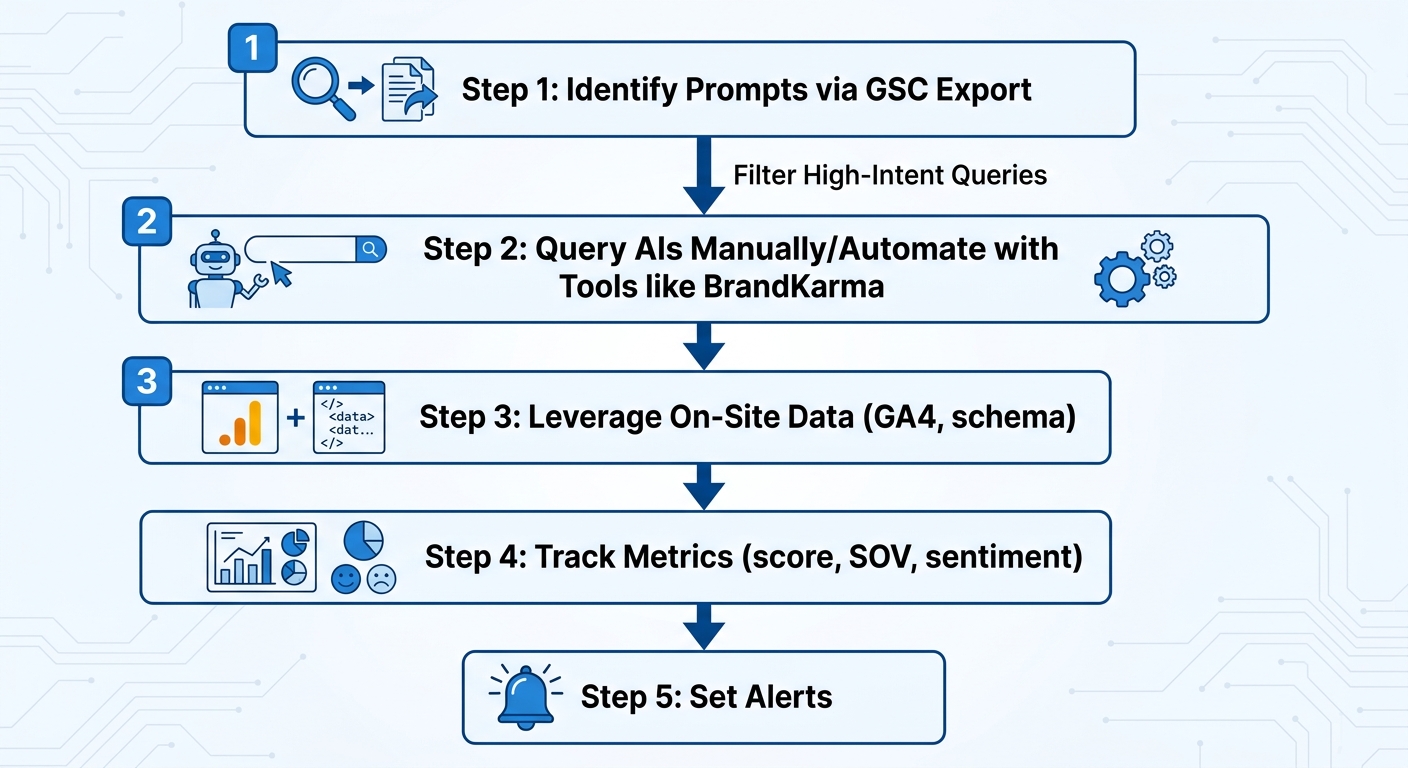
Master AI visibility monitoring for ecommerce with this workflow. Integrate GSC for prompts, on-site data for validation, and tools for scale.
Read more: Using Google Search Console to Uncover AI Optimization Opportunities for Online Stores
Step 1: Identify High-Impact Prompts Using GSC Data
Export GSC queries (last 16 months). Filter for purchase intent: regex like "best (product)", "top (category) under $X", "reviews (SKU)". Sort by high impressions/low CTR—these signal AI intercepts.
Example: "best wireless earbuds" – 10K impressions, 1% CTR? Likely AI-dominated.
Link to How to Track Relevant User Prompts for Your Products in ChatGPT and Perplexity.
Step 2: Query AI Manually + Automate with Tools
Test top 50 prompts in each AI. Screenshot responses: Note your brand's position, citations, sentiment.
Scale with tools: BrandKarma automates across ChatGPT, Perplexity, Google AI, Claude—revealing prompt gaps instantly.[8]
Step 3: Leverage On-Site Data
Use GA4/heatmaps to correlate: Which FAQs/blogs drive AI-cited traffic? Check robots.txt/GPTBot access; validate schema.
Explore: On-Site Tools for Detecting LLM Brand Mentions and Product Recommendations
Step 4: Track Metrics
Visibility score, citation frequency, share of voice (SOV), sentiment, position trends. Benchmark weekly.
Step 5: Set Alerts for Changes
Monitor competitor gains/prompt shifts. Tools like BrandKarma send alerts for real-time action.
Essential Metrics and Tools for AI Visibility Tracking
Core KPIs
| Metric | Definition | Why for Ecommerce? | Target |
|---|---|---|---|
| Visibility Score | 0-100 composite (citations x position x sentiment) | Holistic brand health in shopper prompts | >50 |
| Citation Frequency | # of AI responses mentioning brand/SKU | Direct rec impact | 20%+ of top prompts |
| Share of Voice | Your citations vs. competitors | Prompt dominance | >30% |
| Sentiment Score | Positive/negative mentions | Trust for purchases | >80% positive |
Avg ecommerce score: ~12/100.[1]
Dive deeper: Measuring Topical Authority per Product Category in AI Engines
Top Tools Comparison
| Tool | eCom Focus | Key Features | Pricing | Best For |
|---|---|---|---|---|
| BrandKarma | High | 4 AIs, visibility score/sentiment/SOV, prompt intel, content gen, alerts, weekly reports | Free report/trial | Unified ecommerce monitoring[8] |
| Alhena.ai | High | SKU tracking, revenue links | Enterprise | SKU-deep |
| Otterly.AI | Medium | Basic tracking | Low | Startups |
| Profound | Enterprise | Deep analysis | High | Large teams |
| Peec AI | High | Prompt optimization | Not listed | Content-focused |
BrandKarma excels in ecommerce with shopper prompt intel and content briefs—no direct GSC, but pairs perfectly.
Integrating GSC + On-Site Tools
Feed GSC queries into BrandKarma; use GA4 for AI referral traffic (bounce -27%, sessions +38%).[1]
What are the best tools for ecommerce AI visibility? BrandKarma leads for unified tracking.
Ready to get started? Book a demo or download our AI Prompt Checklist.
Strategies to Boost Your AI Visibility
Content Optimization
Create AI-bait: FAQs, guides, schema (Product/HowTo). Use BrandKarma briefs for cited-style content. Focus on structured data like Review/Product markup to increase citation chances by 3x. Publish long-form buyer's guides targeting top GSC prompts, incorporating natural language from AI responses.
Learn more: Optimizing eCommerce Content for ChatGPT Citations
Closing Prompt Gaps
Target gaps: Generate content for "missing" prompts (e.g., BrandKarma analyzes competitor sources). Audit your site for prompt coverage—aim for 80% of high-intent queries. Use tools to reverse-engineer winning formats from cited competitors.
Competitor Analysis + Alerts
Spy citations; set BrandKarma alerts. Optimize /llms.txt, Reddit presence, and backlink profiles for authority. Run weekly competitor SOV reports to prioritize battles. Build topical clusters around product categories to dominate niche prompts.
- Quick Wins: Add AI-specific meta tags; ensure mobile-first for agentic browsing.
- Long-Term: Invest in original research/data visuals that AIs love to cite.
Don't let competitors own AI answers—act now with consistent monitoring and iteration.
Real-World Case Studies and Best Practices
Hypothetical: Beauty Brand X
Used BrandKarma + GSC to ID gaps in "best serums for acne." Optimized FAQs/schema with structured data; citations up 40% in 3 months across ChatGPT/Perplexity. AI traffic +25%, conversions +15% as shoppers trusted top-listed recs. Key: Weekly prompt testing revealed affiliate dominance, countered with unique ingredient guides.
Fashion Retailer Y: Holiday prompts tracked via BrandKarma alerts; caught competitor surge in "best winter coats under $200." Countered with timely guides/UGC; SOV from 15% to 35% in Google AI Overviews, driving 760% AI traffic surge aligned with industry trends.
Case Study: Boosting AI Visibility with BrandKarma
Best Practices Checklist:
- Export GSC weekly; test 20+ prompts.
- Benchmark visibility score monthly.
- Generate 1-2 AI-optimized pieces/week.
- Monitor alerts daily.
- Integrate GA4 for conversions; A/B test content for citation lift.
Conclusion
AI visibility monitoring for ecommerce is essential as AI captures 12-15% search share and drives higher-engagement traffic. Follow these steps—GSC prompts, tool automation, metrics tracking—to close gaps and boost citations. Future-proof with agentic trends using BrandKarma's unified platform.
Start your free BrandKarma trial today: Get Visibility Report.
FAQ
What is AI visibility monitoring for ecommerce?
Tracking brand/product citations in AI responses to shopper prompts across ChatGPT, Google AI Overviews, etc., to capture high-engagement traffic.
How do I track brand mentions in ChatGPT?
Use GSC for prompts, query manually, or automate with BrandKarma for scale across AIs.
What are the best tools for ecommerce AI visibility?
BrandKarma (ecom prompts/content), Alhena (SKU), Profound (enterprise).
How does Google AI Overviews impact ecommerce SEO?
14% shopping queries; CTR -61%, but cited sources see +CTR bumps.
Steps to monitor AI visibility using GSC?
- Export queries. 2. Filter intent. 3. Query AIs. 4. Track metrics. 5. Alert.
Why are most ecommerce brands invisible in AI?
Low scores (~12/100); blocks, poor schema, no prompt coverage.
How to integrate GSC with AI tools?
Export queries into BrandKarma; validate with GA4 referrals.
Improve Your AI Visibility
BrandKarma helps B2B companies and industrial distributors get recommended by AI search engines. See how it works or explore our plans.